
How to Build a Resilient Supply Chain: 7 Practical Strategies
Originally published January 15, 2026
Updated October 15, 2026
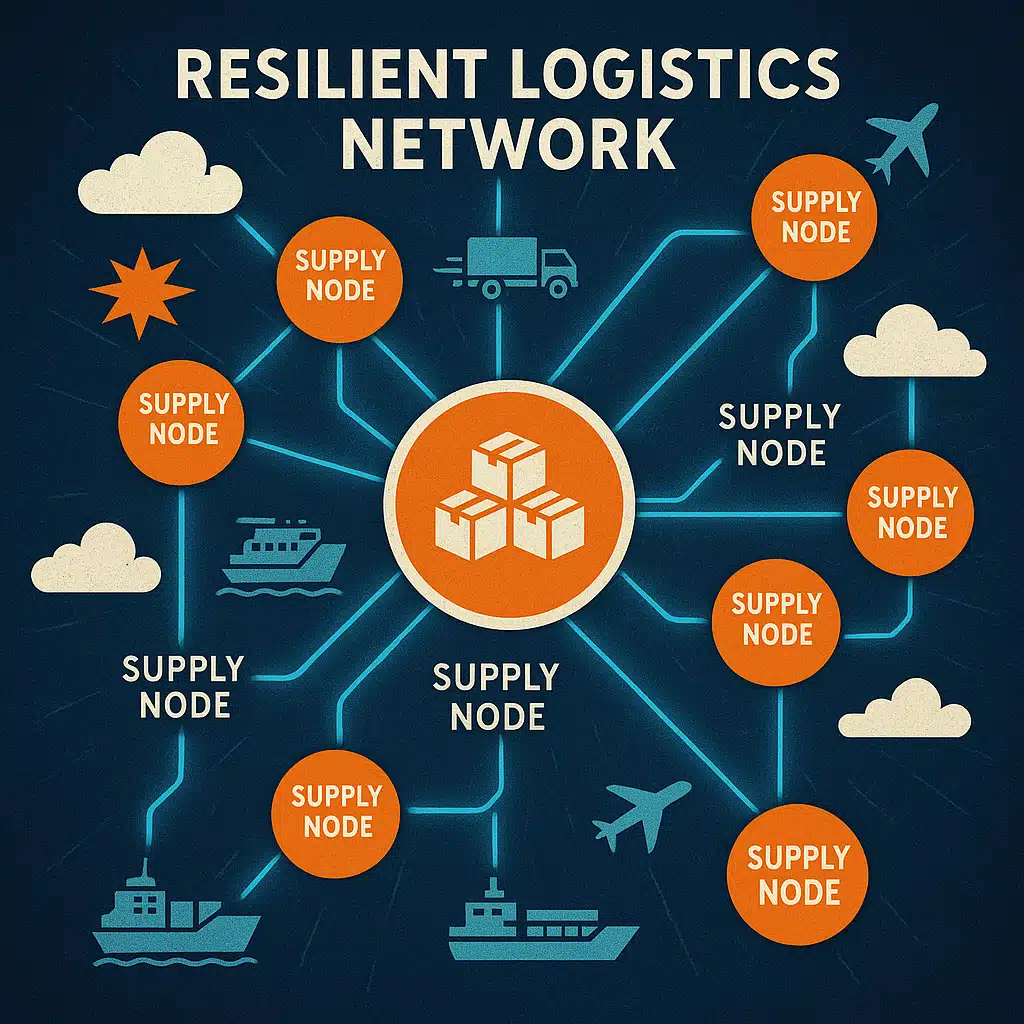
Building a resilient supply chain is now an operational necessity, because supply chain disruptions have become an ongoing challenge. Supplier delays, transportation constraints, extreme weather, regulatory changes, and demand volatility can affect production and customer service with little warning.
Learning how to build a resilient supply chain means creating an operating model that can identify risk, adapt when conditions change, and maintain continuity when disruption occurs. For manufacturers, Food & Beverage companies, and distributors, resilience depends on more than carrying additional inventory. It requires network visibility, flexible logistics capacity, diversified partners, and a clear response plan.
This guide outlines seven practical strategies for building a resilient supply chain that protects operations while supporting long-term growth.
What Is Supply Chain Resilience?
Supply chain resilience is the ability to prepare for disruption, respond effectively when problems occur, and recover without compromising critical operations. A resilient supply chain combines visibility, flexibility, collaboration, and control so an organization can maintain continuity as conditions change.
For additional context, see this supply chain resilience guide from EcoVadis and the resilient supply chains guide from UNC Executive Development.
A resilient supply chain does not try to eliminate every possible risk. Instead, it identifies the risks that could have the greatest impact and builds the flexibility, visibility, and operational control needed to manage them.
Core elements of a resilient supply chain include:
- Mapping suppliers, facilities, transportation routes, and distribution channels
- Identifying single points of failure
- Diversifying suppliers, carriers, routes, and warehouse locations
- Maintaining appropriate inventory and capacity buffers
- Monitoring shipments and inventory in real time
- Creating disruption response plans
- Reviewing performance and improving continuously
1. Map Your Supply Chain and Identify Vulnerabilities
The first step in building a resilient supply chain is understanding how your network operates from end to end. Map the movement of materials and products from suppliers and production facilities to warehouses, carriers, customers, and final delivery points.
Your assessment should identify:
- Single-source suppliers
- Critical materials with limited substitutes
- Dependence on one carrier, route, port, or transportation mode
- Facilities operating near capacity
- Inventory concentrated in one location
- Long or unpredictable lead times
- Manual processes that delay decisions
- Temperature-sensitive or time-critical shipments
Prioritize each vulnerability according to its likelihood, business impact, financial consequences, and expected recovery time. Risk mapping and supplier assessment help teams focus resilience investments on the disruptions most likely to affect operations, customers, and revenue.
For Food & Beverage manufacturers, cold chain risks require particular attention. A delayed refrigerated shipment, missed delivery appointment, or temperature excursion can result in spoilage, compliance concerns, customer dissatisfaction, and lost revenue.
A thorough assessment should also consider risks beyond your immediate suppliers. Limited visibility into subcontractors, logistics providers, and other lower-tier partners can make it difficult to identify emerging problems before they affect your operations. UNC Executive Development recommends asking whether organizations have visibility beyond Tier 1 suppliers.
Read more about supply chain visibility beyond Tier 1
2. Define What Your Supply Chain Must Protect
Resilience does not require treating every product, customer, and shipment the same way. The right strategy depends on what is most important to your business.
Start by defining your continuity priorities:
- Which products must remain available during a disruption?
- Which customers require the fastest recovery?
- Which materials could stop production if they become unavailable?
- What service levels must be maintained?
- How long can each facility operate without replenishment?
- Which shipments require temperature control or specialized handling?
This process helps determine where to invest in safety stock, backup capacity, alternate transportation, or additional supplier relationships.
For example, a company may decide that a critical ingredient, high-volume SKU, or major customer requires greater protection than a lower-priority product. It may then establish a secondary supplier, position inventory closer to demand, or reserve transportation capacity for that part of the network.
The goal is not to create unlimited redundancy. It is to place the right protections around the products, locations, and customers that have the greatest operational and financial importance.
3. Diversify Suppliers, Carriers, Routes, and Facilities
Overreliance on one supplier, carrier, transportation mode, or warehouse location creates a single point of failure. If that resource becomes unavailable, the disruption can spread throughout the network.
Depending on your risk profile, diversification may include:
- Establishing secondary suppliers for critical materials
- Using suppliers in different geographic regions
- Developing relationships with multiple carriers
- Maintaining alternate routes and ports
- Combining truckload, LTL, intermodal, air, or ocean transportation
- Distributing inventory across more than one facility
- Establishing backup warehouse or fulfillment capacity
Diversification should be deliberate rather than automatic. Adding providers can increase complexity and cost, so begin with the risks that could have the greatest impact on production, service, or revenue.
Every alternate supplier, carrier, route, or facility should be evaluated before it is needed. Confirm capacity, service expectations, technology requirements, pricing, compliance standards, and activation procedures in advance.
A logistics partner with access to multiple transportation options can also help shippers adjust equipment, modes, and routes as conditions change. MVP Logistics supports dry, refrigerated, truckload, LTL, and final-mile transportation.
4. Build Targeted Inventory and Capacity Buffers
Lean operations can be efficient during stable conditions, but they may leave little room to absorb disruption. Resilient supply chains use targeted buffers to protect critical operations without creating unnecessary cost.
Buffers may include:
- Safety stock for high-priority products or components
- Inventory positioned closer to customers
- Reserved transportation capacity
- Backup warehouse space
- Flexible labor and fulfillment capacity
- Pre-approved alternate suppliers
- Additional time built into high-risk transportation lanes
The right inventory strategy depends on demand variability, product shelf life, lead times, supplier reliability, customer expectations, and the cost of a stockout.
Food & Beverage companies must also consider expiration dates, storage requirements, temperature control, and the cost of excess inventory. A large inventory buffer may not be the right answer if products have a short shelf life. In those cases, a combination of supplier flexibility, faster replenishment, alternate transportation, and better demand planning may offer stronger protection.
Review buffer levels regularly. A policy that made sense last year may no longer reflect current demand, supplier performance, transportation conditions, or business priorities.
5. Improve Visibility With Real-Time Data
You cannot respond quickly to a disruption you cannot see.
Real-time visibility helps teams monitor inventory, orders, shipments, warehouse activity, and exceptions across the network. More importantly, it gives them the information needed to take action.
Useful visibility capabilities include:
- Live shipment tracking
- Inventory and order status updates
- Automated exception alerts
- Carrier performance reporting
- Warehouse activity monitoring
- Replenishment and demand reporting
- Temperature monitoring for refrigerated freight
- API and EDI integrations
Technology is most valuable when it supports a decision. If an order is delayed, your team should be able to determine whether to reroute the shipment, reallocate inventory, change the delivery appointment, notify the customer, or activate a backup carrier.
MVP Logistics’s warehouse and fulfillment operations use technology such as Extensiv WMS, API, and EDI integrations to support inventory visibility, automated workflows, and reporting. Explore MVP Logistics’s warehouse and fulfillment capabilities.
Visibility should also extend beyond a dashboard. Establish clear ownership for monitoring exceptions, escalating issues, contacting providers, and communicating with customers. Data creates value when it leads to timely action.
6. Create Scenario Plans and Disruption Playbooks
A resilient supply chain does not rely on improvisation during a crisis. It establishes response plans before disruption occurs.
Scenario planning can help your team prepare for:
- A primary supplier becoming unavailable
- A port closure or transportation interruption
- A sudden demand increase
- A warehouse shutdown
- A carrier capacity shortage
- A major weather event
- A regulatory or trade policy change
- A refrigerated shipment experiencing a delay
For each scenario, document:
- The conditions that trigger the response
- The people responsible for making decisions
- The alternate suppliers, carriers, routes, or facilities available
- The inventory and capacity requirements
- The customer communication process
- The steps required to return to normal operations
Testing these scenarios helps organizations move from risk awareness to operational readiness. Review the plans with procurement, manufacturing, logistics, warehousing, sales, and customer service teams so each group understands its role before disruption occurs.
Scenario planning is most effective when it changes everyday sourcing, inventory, allocation, and investment decisions, rather than being used only to guide the response to a crisis.
Learn more about operationalizing supply chain resilience.
Scenario planning should be practical and specific. Instead of creating a general statement such as “activate backup transportation,” document which providers should be contacted, what information they need, who approves the change, and how the decision will affect cost, timing, inventory, and customer communication.
Update each playbook as your business changes. New products, customers, facilities, suppliers, and transportation lanes can create new vulnerabilities.
7. Make Resilience Part of Continuous Improvement
Supply chain resilience is not a one-time initiative. Supplier performance changes, customer expectations evolve, transportation markets fluctuate, and new risks emerge.
Establish a regular review process that measures:
- On-time pickup and delivery performance
- Order fulfillment accuracy
- Inventory availability
- Stockout frequency
- Carrier and supplier performance
- Transportation cost and service trends
- Warehouse capacity and throughput
- Exception response time
- Recovery time after disruption
Use this information to improve your network design, inventory policies, carrier mix, warehouse footprint, and response plans.
After a disruption, review what happened, how quickly the team responded, what prevented a faster recovery, and what should change before the next event. This turns operational experience into a stronger supply chain strategy.
Resilience should also be included in routine business decisions. Procurement, network planning, inventory policy, transportation sourcing, and facility planning should all consider both cost and continuity.
How MVP Logistics Helps Build Resilient Supply Chains
Building resilience requires more than adding a supplier or signing a new transportation contract. It requires a clear understanding of the network and a partner that can help move recommendations into day-to-day execution.
MVP Logistics combines supply chain strategy with hands-on implementation for mid-market Food & Beverage, Manufacturing, and Distribution companies. Through its Supply Chain Strategy services, MVP Logistics provides end-to-end analysis, transportation strategy, carrier management, inventory optimization, strategic project management, and customized consulting.
MVP Logistics can then support execution through:
Transportation: Dry, refrigerated, truckload, LTL, and final-mile solutions through a flexible carrier network.
Warehousing and fulfillment: Scalable warehouse operations, inventory visibility, automated workflows, and API/EDI integrations.
Strategic implementation: Ongoing support to execute, measure, and refine recommendations rather than stopping at a written report.
MVP Logistics’s approach connects network diagnostics with accountable implementation. Instead of handing your team a report and stepping away, MVP works alongside you to help put the strategy into operation, monitor performance, and refine the model as business conditions change.
This advisory-plus-execution model helps companies move from identifying supply chain risk to building a practical response.
Build a More Resilient Supply Chain
To build a resilient supply chain, start by mapping your network, defining what must be protected, reducing single points of failure, improving visibility, and testing your response plans.
The most resilient supply chains are not necessarily the ones with the most inventory or the largest number of providers. They are the ones with clear priorities, practical alternatives, reliable data, and the ability to make informed decisions when conditions change.
Request a Consultation with MVP Logistics to discuss your supply chain strategy, transportation, warehousing, and fulfillment requirements.
Not sure where your supply chain may be most vulnerable? A discovery session with MVP Logistics can help you take a closer look at your network, identify risks, and explore opportunities to build greater resilience.
Frequently Asked Questions
What is the best way to build a resilient supply chain?
Begin by mapping your network and identifying the suppliers, routes, facilities, and processes that represent the greatest risk. Then prioritize supplier diversification, targeted inventory buffers, real-time visibility, alternate transportation options, and scenario planning.
Why is supply chain visibility important?
Visibility helps teams identify delays, inventory shortages, capacity constraints, and other exceptions before they become larger operational problems. It also supports faster decisions about rerouting, inventory allocation, customer communication, and backup capacity.
How does supplier diversification improve resilience?
Supplier diversification reduces dependence on a single source. If one supplier experiences a shutdown, delay, quality issue, or capacity shortage, an approved alternate supplier can help maintain continuity.
Does building a resilient supply chain require more inventory?
Not always. Resilience may require targeted safety stock for high-priority products, but it can also be improved through alternate suppliers, flexible transportation, distributed inventory, backup warehouse capacity, and better visibility.
What role does a 3PL play in supply chain resilience?
A consultative 3PL does more than provide transportation capacity or warehouse space. It begins by diagnosing the network, identifying vulnerabilities, and recommending practical alternatives across transportation, inventory, warehousing, and fulfillment. It then helps coordinate execution, monitor performance, and improve the operating model over time. This differs from a transactional provider that focuses primarily on fulfilling individual shipment or storage requests.
Request a discovery session with MVP Logistics to discuss your supply chain strategy, transportation, warehousing, and fulfillment requirements.