
DOT Blitz Week Is May 12-14. Here’s What Shippers Need to Know.
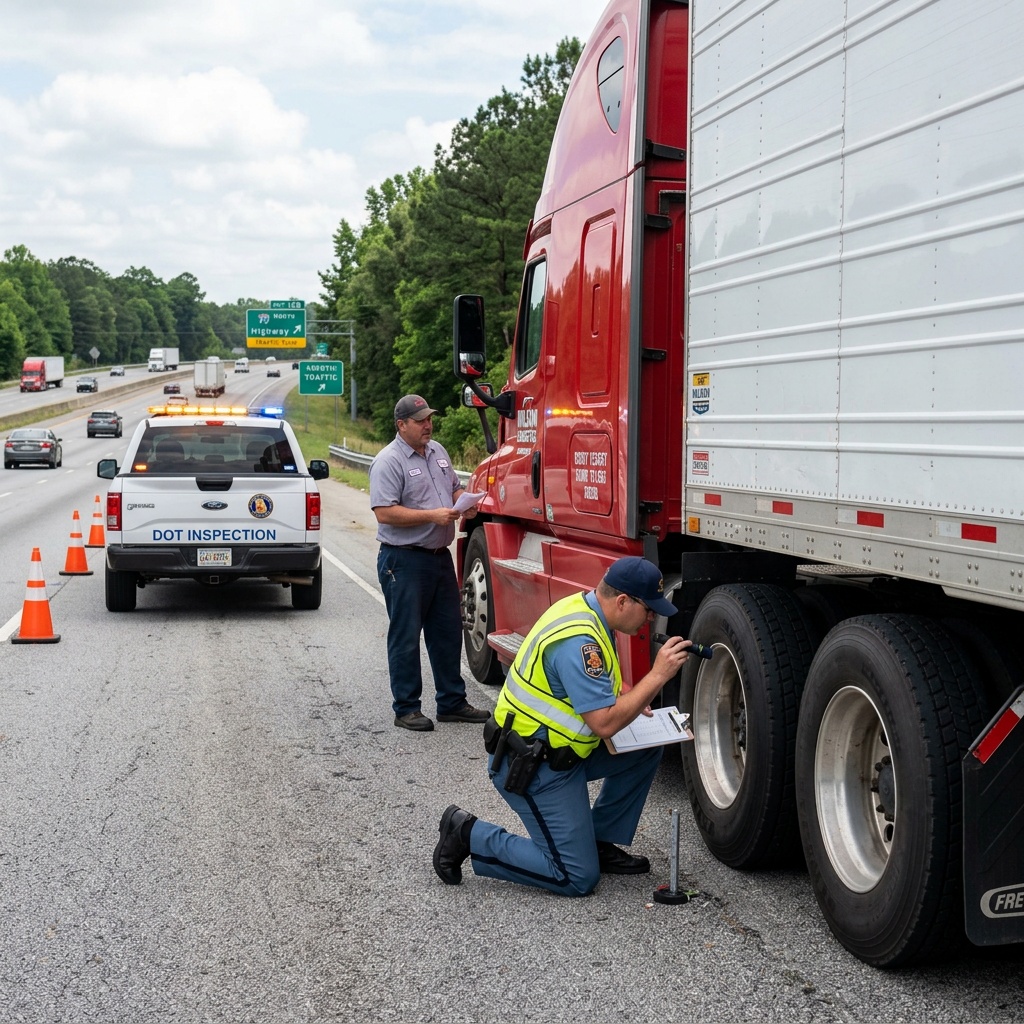
Once a year, for exactly 72 hours, the Commercial Vehicle Safety Alliance (CVSA) coordinates the largest targeted commercial vehicle enforcement program on the continent. Thousands of certified inspectors take to weigh stations, fixed inspection sites, and roadsides across the U.S., Canada, and Mexico, and the results matter well beyond the three days themselves.
For shippers, especially those in food and beverage and manufacturing who depend on reliable, on-time domestic transportation, International Roadcheck isn’t just a compliance event to hand off to carriers. It’s a week that can affect your transit times, your capacity availability, and ultimately your ability to get product where it needs to be on schedule.
Understanding what’s coming… and making sure your logistics operation is ready for it, is the difference between a routine week and an unexpected disruption.
What inspectors are looking for in 2026
Each year, the CVSA designates specific focus areas that inspectors will pay particular attention to alongside the standard Level I inspection checklist. The two areas of focus for this year are outlined below.
Cargo Securement
How loads are tied down, blocked, and braced — with special attention to whether cargo could shift, spill, leak, or fall during transit.
ELD tampering & falsification
Inspectors will scrutinize electronic logging device records for manipulation, false entries, or concealed hours-of-service violations.
These aren’t arbitrary choices. Last year, cargo securement violations generated more than 34,000 citations; over 18,000 for loads not secured to prevent leaking, spilling, or falling, and more than 16,000 for unsecured vehicle components. Falsification of records of duty status ranked as the second most-cited driver violation in 2025, with over 58,000 violations recorded. The CVSA focuses on what the data tells them is failing in the field, and in 2026 both of these areas are squarely in the spotlight.
Beyond the focus areas, every standard Level I inspection covers the full vehicle and driver compliance: brakes, tires, lights, steering, coupling devices, and driver credentials including licensing, medical certification, and hours-of-service documentation. Any vehicle or driver found to be out of compliance can be placed out of service on the spot, meaning that load stops moving until the issue is resolved.
~15 Inspections per minute across North America during the 72-hour window
What this means for your freight
The most immediate operational risk for shippers during Roadcheck week is out-of-service orders. When a vehicle or driver is placed out of service, the freight on that truck doesn’t move; not until the violation is corrected and the vehicle or driver is cleared. For time-sensitive shipments, perishable goods, or just-in-time manufacturing inputs, even an hours-long delay can have real downstream consequences.
Beyond individual load disruptions, Roadcheck week tends to tighten available capacity across the board. Carriers with compliance concerns may voluntarily reduce their operating footprint during the three-day window to manage risk. Some fleets pull trucks for pre-event maintenance checks, temporarily reducing available capacity. The cumulative effect is a brief but real tightening of the spot market, particularly on lanes where enforcement activity is highest.
For food and beverage brands running refrigerated freight, the cargo securement focus this year is especially worth noting. Reefer loads have specific securement requirements: pallets, load bars, proper blocking and bracing, and an inspector who finds a load that appears capable of shifting has grounds to issue a violation and, in serious cases, pull the vehicle from service. A delayed reefer load isn’t just a logistics problem; it’s a potential product loss.
How to protect your shipments
The good news is that Roadcheck is entirely predictable as it follows the same window every year, focus areas published months in advance. That means preparation is straightforward for any shipper or logistics provider paying attention.
The most important steps to take before May 12 are communicating with your carriers and 3PL partners about their pre-event maintenance and compliance protocols, confirming that loads are being packed, palletized, and secured to meet cargo securement standards, and building modest buffer time into any shipments scheduled for that week – particularly for time-sensitive or temperature-controlled freight.
None of these steps are burdensome if you have a logistics partner who’s already monitoring this. The brands that get caught flat-footed during Roadcheck week are typically the ones whose carriers and 3PL partners weren’t thinking about it, and didn’t flag it, until loads started getting delayed.
The bigger picture
International Roadcheck is a useful annual reminder that compliance isn’t owned by the carrier alone, it’s a shared opportunity across the supply chain to strengthen reliability from pickup to final delivery. When a truck gets pulled out of service the freight on that truck waits, which means… the shipper, receiver, and consumers feel it. The quality and compliance posture of your carrier network is directly connected to the reliability of your supply chain, and Roadcheck week makes that connection visible in a very concrete way.
May 12 is less than a month away. If you haven’t already had a conversation with your logistics provider about how they’re preparing, now is the time.