
How to Build a Resilient Supply Chain for Perpetual Disruption
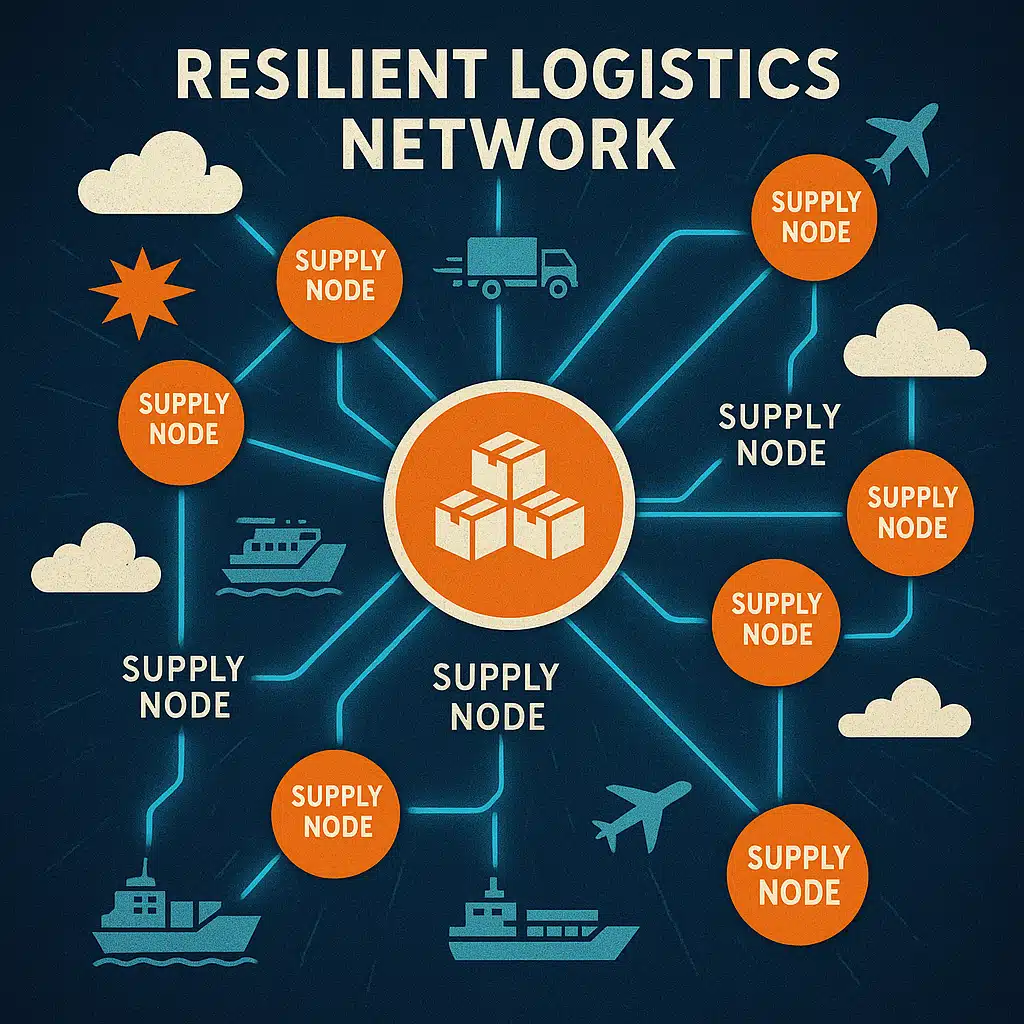
Discover actionable strategies to strengthen your supply chain and keep your operations running smoothly, no matter what challenges arise.

Navigating the New Normal: Why Resilience Is Critical in Modern Manufacturing
Supply chain planning for modern manufacturing requires mid-market manufacturers, particularly in food and beverage, agility and resilience. The days of relying on static, linear supply chains are long gone. Today, success is measured by how quickly your operation can adapt, recover, and maintain service levels, even when disruptions strike.
Modern manufacturing logistics requires a holistic approach that anticipates risk and builds in safeguards at every step. At MVP Logistics, we recognize that resilience is not just about bouncing back; it’s about proactively preparing for the unknown, so that your business can keep moving forward when others stall.
Identifying Vulnerabilities: Assessing Your Supply Chain’s Weak Links
Resilient supply chains begin with a clear-eyed assessment of current vulnerabilities. Manufacturers must map their entire supply network: suppliers, transportation routes, distribution centers, and warehouse operations identifying where delays, barriers, and single points of failure exist. Particular attention should be paid to cold chain logistics and time-sensitive deliveries, where even minor disruptions can lead to spoilage or lost revenue.
A comprehensive review, supported by data-driven analytics, enables you to pinpoint gaps in inventory placement, reliance on individual carriers, or underutilized warehousing capacity. MVP Logistics partners with clients to conduct end-to-end analysis and strategic project management, helping uncover hidden risks and ensuring your logistics ecosystem is ready for the unexpected.
Tech-Enabled Visibility: Leveraging Real-Time Data for Proactive Decision-Making
Visibility is the cornerstone of resilient supply chain logistics. With today’s advanced technology, manufacturers can achieve real-time insight into inventory levels, shipment status, and warehouse operations. Tools and robust API/EDI integrations provide the actionable data needed to make fast, confident decisions.
By leveraging real-time tracking and automated alerts, your teams can respond proactively to potential disruptions by rerouting shipments, reallocating inventory, or alerting customers before issues escalate. MVP Logistics emphasizes technology-enabled solutions that empower our clients to move from reactive problem-solving to proactive, data-driven execution.
Building Flexibility: Diversification and Strategic Partnerships for Stability
Flexibility is essential in managing manufacturing logistics amidst ongoing disruption. Diversifying your carrier base, warehousing locations, and transportation modes reduces dependence on any single route or provider. Strategic partnerships with 3PLs like MVP Logistics offer access to a broad network of TL and LTL carriers, scalable warehouse space, and specialized solutions such as final mile delivery.
By aligning with a partner committed to proactive communication and custom-built service models, you gain the ability to scale operations, shift resources, and maintain high service levels even as market dynamics change. Our team’s industry expertise and hands-on support ensure your supply chain can flex without sacrificing reliability or efficiency.
Futureproofing Your Supply Chain: Continuous Improvement and Scenario Planning
Building a resilient supply chain is a continuous process, not a one-time project. Manufacturers must regularly revisit strategies, measure performance, and implement improvements. Scenario planning such as simulating disruptions caused by regulatory changes, port closures, or demand spikes helps organizations prepare and refine playbooks for rapid response.
MVP Logistics supports clients through ongoing consulting, data-driven analytics, and transparent reporting, driving continuous improvement across warehousing, transportation, and fulfillment. By staying agile, embracing innovation, and planning for what’s next, manufacturers can not only withstand disruption but turn it into a competitive advantage.